
Define monitoring sites
Build a site register with identifiers, habitat classifications, geographic coordinates and physical characteristics.
Connect monitoring sites, field surveys and environmental observations to understand marine ecosystems through The Fisheries Manager.
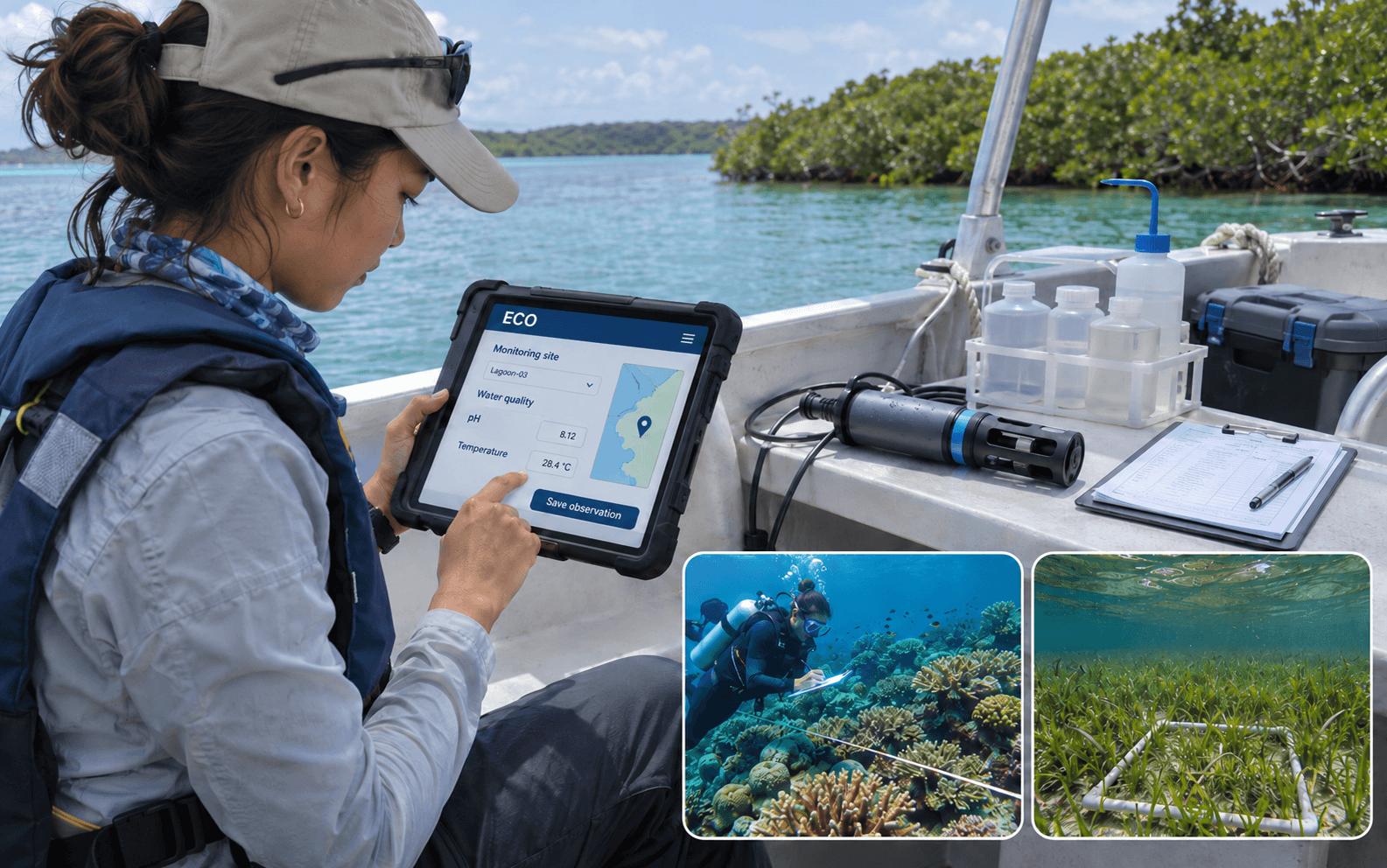
ECO retains the location, timing and fieldwork context behind environmental records, so teams can compare observations across sites and periods.
Build a site register with identifiers, habitat classifications, geographic coordinates and physical characteristics.
Connect site visits with dates, survey methods, field conditions and observations of water quality and marine habitats.
Bring records into maps and dashboards to compare sites, follow changes and prioritise monitoring.
Explore ocean acidification and water quality, coral reef health, seagrass habitats and sargassum monitoring, alongside invasive species, habitat damage and environmental incidents.
Connect measurements of marine water conditions to the monitoring site and the field visit where they were collected.
What teams can record
Review measurements across sites and periods to understand environmental conditions and changes over time.
Every observation is linked to a monitoring site and field visit, supporting comparisons across locations and over time.
A shared view of monitoring coverage and observations helps teams decide where to look next.
Place monitoring sites and observations on a map through selectable data layers, retaining the location behind every record.
Review indicators, recent events, measurement trends, priority alerts and time since the latest site survey.
Follow monitoring events through Draft, Submitted and Approved statuses, and search, filter and maintain observation records.
Keep site visits, survey methods and environmental observations together in a consistent monitoring record.
Review habitat observations and measurements with the fieldwork context needed to interpret changes.
Use a shared overview to prioritise monitoring and follow up on sensitive habitats and significant incidents.
ECO is the environmental and habitat monitoring module within The Fisheries Manager. It provides a shared information foundation for monitoring operations and informed stewardship of marine resources and ecosystems.
A reliable overview depends on consistent data entry, sufficient monitoring coverage and effective review.
Explore the TFM platformECO supports observations of ocean acidification and water quality, coral reef health, seagrass, sargassum and other environmental incidents. Records are linked to monitoring sites and field visits.
Yes. ECO is the environmental and habitat monitoring module within TFM.
ECO connects observations with their fieldwork context so teams can compare sites and periods, identify issues requiring attention and prioritise monitoring. The quality of that overview depends on consistent data entry, monitoring coverage and effective review.
Let’s talk about your monitoring
Talk to Fisheries Technologies about your monitoring sites, field surveys, marine habitats and environmental reporting needs.